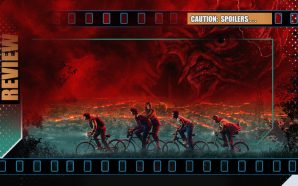
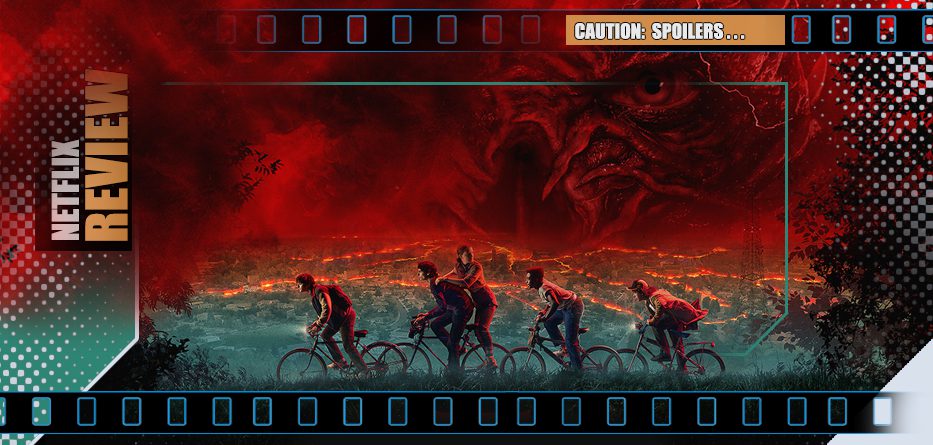
While there is little doubt that we’re living in a golden era of television – with something for everyone to love or complain about – and more to watch in more varying ways, one of the downsides of the ever-ambitious productions is still the time it takes between seasons. Away from the templated stock of the networks, the satellite and streaming ventures feature less episodes but higher budgets. Those with particularly intense post-production needs often find that it is impossible to create a run of episodes to be broadcast every year. The likes of Andor, The Last of Us and House of the Dragon are prime examples of critically-acclaimed, around-the-water-cooler, must-see shows with huge chasms between seasons. But even in that arena, where some of the best shows on television have repeatedly to shrug when it comes to regular scheduling, the time between Season Four and Season Five of Stranger Things is over a quite astonishing three years.
Two impacts of the sparse scheduling are keeping the audience invested and loyal during the considerable down-times and, pragmatically, stopping the younger actors apparently aging faster than their characters. (Natalia Dyer noted that she was already twenty years old when she was hired to play the teenage Nancy Wheeler and celebrated her thirtieth birthday earlier in 2025!) Given the passage of time, it’s understandable if you suddenly need a refresher course on where we left the people of Hawkins or the need to run back and watch at least the last few episodes of Season Four.
With the recent debut of ‘IT: Welcome to Derry‘ over on HBO, there’s some common ground (evil figure, resourceful kids, etc.) and an ouroborus comparison is somewhat inevitable, but it doesn’t feel like an either/or threat. ‘…Derry’ unapologetically goes for the throat, ‘Stranger Things‘ unapologetically goes for the heart…
Initially a love-letter to the action adventure genre of the 1980s (in which it is mainly set) and as a vehicle for those who remember the era with equal amounts of nostalgia, joy and fashion shame, the show has grown up in a similar way to the Harry Potter saga, a young cast facing growing amounts of myth and menace and maturity and all getting steadily darker in tone as it progressed. The fourth season provided mixed reviews, separating the characters too much and an inconsistent tone. It was still a ratings winner.
There are four episodes in this latest, fifth, run (all coming in around the hour mark or more), with another three to be released on Christmas Day 2025 and the feature-length finale (over two hours) set for New Year’s Eve. With an impressive wave, perhaps a tsunami, of merchandising tie-ins and publicity partners – including Target, Doritos, LEGO, Walmart, Chips Ahoy, Lite Brite, Bath & Body Works, Pandora, and Discover – and with all the bravado of a political campaign, the fifth season is now here… so, has it been worth waiting for?
Largely, yes… with some caveats. The series presumes you’re already a fan (this really isn’t a great jumping on-point, but by now you’re unlikely to be a ‘newbie’) and quickly gets down to re-establishing the new status quo of the beleaguered town and its people. The first scene in opener Chapter One: The Crawl is a throwback to the time Will Byers went missing during the early days of the first season and now shows exactly how Vecna (whom we first met in Season Two) fitted into that void. The show has had some quite stunning VFX, production design and askew cinematography over the years, but the time-jump and flashback mean there’s some inevitable de-aging tricks needed in this ice-breaking teaser. Though well done, there’s still something of an uncanny valley lurking in that recreation. It makes you a little worried that, in an effort to go out with a bang, the show might pivot too far into those post-production effects. Certainly, the increase in high definition shine and shimmer is noticeable: there’s suddenly more pixelated-flexibility in the likes of the parkouring, predatory demogorgons (also perhaps due to their sheer number this time) and Vecna’s visage and exoskeleton are slightly more stylised (perhaps down to letting post-production handle some of the heavy-lifting that was previously down to hours of prosthetics for actor Jamie Campbell Bower). There’s bigger set-pieces and each scene has notable depth. This is a show confident enough to put some strut in its stride.
But the opener has the main purpose to familairise ourselves with the current lay of the land and find out how things have changed as the many disparate Hawkinites do their best impression of the Wolverines from Red Dawn, laying low, rebelling against the surrounding military and trying to wage their own guerilla warfare. Our valiant heroic townsfolk have been reunited, we left Max in a body-broken coma, the town of Hawkins is devastated and the evil Vecna was seriously beaten down but clearly not beaten. All caught-up, my dude?
The shifting character-dynamics work well and are one of the show’s core strengths… and it’s all second-nature to most of the regular cast. There are a few necessary surprises, but the success is largely down to balancing and meeting those known expectations and still managing the occasional elements of ‘Well, dammmmmmmn….‘. The Duffer Brothers know the best way to pull the rug out is to get people comfortable first and Stranger Things alternates between comfort food and uncomfortable carnage. As always there’s other genre-references galore, but that’s part of why we’re here and the Duffer Brothers have never been shy at being obvious with their inspirational choices. There are subtle, not-so-subtle nods and outright homages to Aliens, Back to the Future, Star Wars Alice in Wonderland and Shyamalan’s The Woods. Madeleine L’Engle’s young adult novel A Wrinkle in Time also gets more than a mere name-check. All are given a suitable Stranger spin and there are plenty of call-backs to elements of earlier seasons that are there for the initiated. There are some sleights of hand and ‘just go with it’ aspects that are unlikely to be fully detailed (sometimes the entrance to the Upside Down is literally vertically-challenged, sometimes not) but it’s clear that while aspects of the story to date have sometimes meandered, diverted and evolved as Things progressed, the Brothers have had a blueprint and checklist of things they want to include and explain… and die-hard fans will find plenty of touchstones to delight.
The cast is ever-growing and an expansive one. Once we’ve caught up with them all, the narrative has to find ways to separate them once again while simultaneously giving more time to Nell Fisher as Holly (Nancy’s sister and pivotal to Vecna’s plans as Chapter Two: The Vanishing of Holly Wheeler reveals) and Jake Connelly as the rotund rebel Derek Turnball. Some of that plotting feels organic, some less so. Much of the following episodes sees the characters divided in smaller groups, each facing challenges as they try to work out the route to finding out Vecna’s fate. Our heroes have been tracking military movements and co-ordinating their own, so Hopper (David Harbour) heads into the Upside Down on regular map-and-track missions (the ‘Crawl’ of the title). When things, inevitably go sideways, Eleven (Millie Bobby Brown) heads in to help, but faces human threats (now led by the legendary Linda Hamilton) and supernatural obstacles of her own. Steve (Joe Keery), Jonathan (Charlie Heaton) Nancy, Dustin (Gaten Matarazzo), Joyce (Winona Ryder), Mike (Finn Wolfhard) and Lucas (Caleb McLaughlin) are, to begin with, working top-side trying to keep their signaling strong (and with Steve and Jonathan clearly competing for Nancy’s affections), though it’s inevitable their world will be turned Upside Down. The troubled Will (Noah Schnapp) tries to find his place, emotionally and physically) in the broken world and gets wise words from Robin (Maya Hawke) that ultimately prove pivotal. There’s also key support from the likes of Cara Buono as Karen Wheeler (impressive as a wine-fueled Ripleyesque figure when it comes to protecting her family)and Priah Ferguson as the small but mighty Erica Sinclair.
Though there are a lot of moving parts, perhaps a few too many, the series mostly juggles its cast well, each getting moments to shine or at least remind the audience of why they’re there – and that’s no mean achievement. Cue much banter and battling. The final scenes of fourth episode The Sorcerer give us all the action we could want – all our heroes in peril but Will finally channeling/reverse-engineering the power left after his encounter with Vecna. It’s full-on Aliens with multiple demadogs attacking the military base and only Will’s just-in-time power-up intervention saving his friends from certain demise (though, continuing some rather graphic bloodshed, plenty of soldiers appear to be collateral damage). With the recent debut of IT: Welcome to Derry over on HBO, there’s some common ground (evil figure, resourceful kids, etc.) and an ouroborus comparison is somewhat inevitable, but it doesn’t feel like an either/or threat. …Derry unapologetically goes for the throat, Stranger Things unapologetically goes for the heart. Your mileage may vary. It’s all good stuff, if falling just short of a true, fist-pumping moment with the equivalent emotion wallop of Kate Bush-ness… as yet.
But speaking of such – what of Sadie Sink’s Max, I hear you cry? Trying to escape Vecna – and literally ‘Running up that Hill‘ to the beat of that iconic Kate Bush song – the character became an immediate Season Four highlight and point of true investment for the fans (I know of no-one who wasn’t shouting ‘RUN!!!‘ at the screen during her desperate attempt to re-enter the real world). For a while the audience might be a little worried that Sink and the broken Max would be confined to a coma and hospital bed for the duration of the final run, but we should know better and we find out at the end of the third episode (‘The Turnbow Trap‘) that she’s very much going to be a key presence in the season, though trapped in the same mind-scape in which Vecna is collecting his younger victims. The mind-scape also offers lots of tantilising titbits for those eagle-eyed viewers and those speculating about where the show is heading and how it got there.
We exit the current run (currently boasting record-breaking viewing figures of nearly 60 million) with Will talking finally realising the connection to Vecna can be utilised to his advantage and he turns the dial up to Eleven (sic) to save many of his friends in spectacular form… so, where do we go from here… well, there’s still plenty of untangling ahead for this fantastical yarn.
There’s an argument that Stranger Things knows its niche and groove and is sticking to it as we reach the end. If so, it’s a seam still worth mining and half the appeal is the continuing joining of dots, callbacks and sheer nostalgic energy. True, it’s still not clear yet whether the show will ultimately stick the landing (too many great shows have somehow managed to stumble in the final push), but with several hours of story yet to appear, essentially the equivalent of a handful of feature films, it has all the elements to permenantly secure its televisual and cinematic legend.